

The Ultimate Guide to Toilet Training: Tips, Advice and Confidence for Parents

Toilet training: two little words that can bring up all sorts of feelings for parents. There’s the excitement of reaching a new milestone, mixed with the very real question of where to begin — and how many spare pairs of pants to pack.
This is a practical, reassuring guide to toilet training for Australian families. There’s no one-size-fits-all method, no magic age and no need to turn the process into a race. Some children take to it quickly; others need more time, encouragement and a few changes of clothes along the way.
The most helpful starting point is understanding your child, looking for signs of readiness and building simple habits into everyday life. Keep expectations realistic, stay positive and remember that progress is rarely a straight line.
We’ve brought together advice on when to start, how to introduce the potty or toilet, what you’ll need and how to handle the little setbacks that are a normal part of learning.
Your Toilet Training Guide Includes:
- When Do Most Children Start Toilet Training?
- Signs Your Child May Be Ready
- How to Introduce the Potty or Toilet
- Your Step-by-Step Toilet Training Guide
- Toilet Training Setbacks: What’s Normal and What to Do
- What You Need for Toilet Training: A Simple Kit List
When Do Most Children Start Toilet Training?
There’s no set age when every child should be toilet trained. Australian guidance commonly places the window between around 18 months and 3 years, with many children showing signs of readiness at about 2 years. Some are ready earlier, while others need longer. Development, confidence and individual circumstances all play a part.
Rather than focusing on a birthday or comparing your toddler with other children, look for a pattern of readiness. Your child might stay dry for two hours or more, show interest in the toilet, tell you when they’ve done a wee or poo, or become uncomfortable in a wet or dirty nappy. Being able to follow simple instructions and pull their pants up and down can also help.
Not every child will show every sign, and there’s no need to wait for a perfect checklist. The Raising Children Network toilet training guide explains the signs to look for and how to get started. Healthdirect also recommends waiting until your child shows signs that they’re ready, rather than rushing the process.
You can build familiarity before formal toilet training begins. Talk about wees and poos, let your child see the potty and make it part of the bathroom routine. These small introductions can help the potty or toilet feel less unfamiliar when your child is ready to give it a try.
Signs Your Child May Be Ready for Toilet Training
Readiness is about more than staying dry. It can involve physical development, communication, curiosity and a growing interest in doing things independently. You might notice that your child:
Stays dry for two hours or more, or wakes from a nap with a dry nappy
Lets you know when they’ve done a wee or poo, using words, gestures or expressions
Shows interest in the bathroom or wants to watch trusted family members use the toilet
Can follow simple instructions and sit comfortably for a short time
Tries to remove a wet or soiled nappy, or asks to be changed
Can help pull their pants up and down
These are useful clues, not a test your child has to pass. Raising Children Network notes that there are no major differences between boys and girls in when they show readiness or how quickly they learn. Follow your child’s cues and choose a time when family life is reasonably settled.
A gentle reminder: If a big change is coming up — such as starting childcare, moving house, welcoming a new baby or going on holiday — it may be easier to wait until your routine is more settled. There’s no need to add extra pressure for you or your toddler.
How to Introduce the Potty or Toilet
You don’t need to make a big announcement or change everything overnight. Start by making the potty or toilet a familiar, everyday part of your child’s routine. Keep the experience relaxed and let curiosity lead the way.
Build Toilet Habits Into Your Daily Routine
Try offering the potty at natural points in the day, such as after waking up, after meals or before bath time. At first, your child might simply sit on it fully clothed or watch you explain what it’s for. That’s fine — the aim is to make it familiar, not to expect an immediate result.
Use simple, consistent words such as “wee”, “poo” and “toilet”. If your child shows signs they need to go — perhaps they become quiet, wriggle, hide or hold themselves — gently offer the potty or toilet. Praise them for trying, even if nothing happens. If they aren’t interested, don’t force it; you can try again another time.
Should You Start With a Potty or the Toilet?
There’s no single right answer. Some children like having a small potty they can reach easily, while others prefer to copy the adults around them and use the toilet from the beginning. You can introduce both and see which your child feels most comfortable with.
If your child uses the toilet, a secure toilet training seat and a stable footstool can help them feel supported. Their feet should be able to rest on a surface rather than dangling, especially when they’re sitting to poo.
Why Hydration and Healthy Bowel Habits Matter
Keep offering water regularly throughout the day. There’s no benefit in restricting drinks to try to prevent accidents. A balanced diet with fruit, vegetables and wholegrains, alongside enough fluid, can help reduce the risk of constipation.
Constipation can make toilet training harder. If doing a poo is uncomfortable, a child may start holding on or avoiding the toilet. If your child has ongoing constipation, pain, or you’re worried about their bowel or bladder habits, speak with your GP or child and family health nurse for advice.
Your Step-by-Step Toilet Training Guide
Every child’s experience is different, and these steps don’t need to happen on a strict schedule. Think of them as practical ideas you can introduce gradually, following your child’s confidence and development.
Make the Potty Familiar
Place the potty somewhere your child can see it, such as the bathroom. Explain what it’s for and let them explore it. They might sit on it fully clothed, put a favourite toy beside it or simply watch you use the toilet. There’s no need to rush to the next step until they’re comfortable.
Talk About Wees, Poos and Body Signals
Use clear, simple words for going to the toilet. At nappy-change time, you can explain what has happened and what you’re doing: “You’ve done a wee, let’s get you clean.” Over time, help your child connect the words with the sensations they notice in their body.
Offer the Potty at Familiar Times
When your child is comfortable with the potty, offer it at predictable moments, such as after waking up, after meals and before bath time. Keep sits short and relaxed. If your child doesn’t do a wee or poo after a few minutes, let them get up and move on. The aim is to build a routine, not to make sitting on the potty feel like a chore.
Try Short Periods Without a Nappy
When your child is showing signs of readiness, try a short period at home in underwear or with their bottom uncovered. Keep the potty close and choose a time when you don’t need to rush out. This gives your child a chance to notice the feeling of needing to wee or poo and practise getting to the potty.
Accidents are likely, especially at first. Stay calm, help your child get cleaned up and treat it as part of learning. Avoid telling them off or making them feel embarrassed.
Introduce Reusable Toilet Training Pants
When your child is beginning to recognise their toilet signals and is having some success using the potty or toilet, reusable toilet training pants can be a helpful next step during the day.
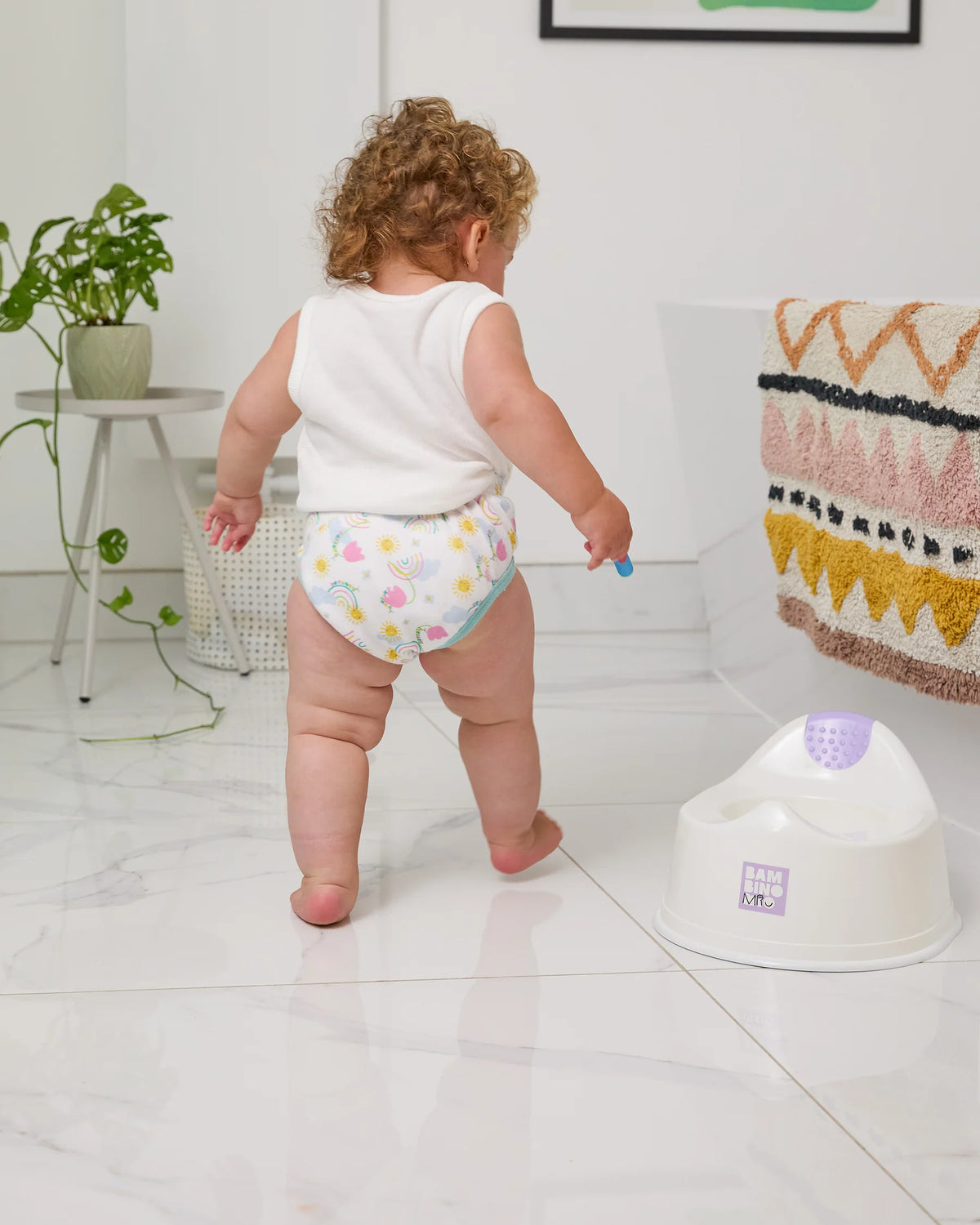
Unlike a nappy, training pants feel more like underwear and can help your child practise pulling their pants up and down. Bambino Mio® training pants have absorbent layers designed to catch small leaks and dribbles as your child learns. They aren’t designed to contain a full wee, so accidents can still mean a change of clothes. Keep a spare pair of pants and bottoms in your bag when you head out.
You can continue using nappies for naps and overnight while your child is learning during the day. There’s no need to tackle everything at once.
Build Confidence Away From Home
Once your child is becoming more confident at home, start with short trips out. Before you leave, offer a toilet visit and make a note of where the toilets are when you arrive. Pack spare training pants, a change of clothes and a wet bag for anything that needs to come home.
Childcare, playdates and days out can all take a little planning at first. Let other caregivers know the routine and the words you use for going to the toilet, so your child gets a consistent message.
Move From the Potty to the Toilet When They’re Ready
Some children are happy to move from the potty to the toilet; others prefer to take their time. A child-sized toilet training seat can make the larger toilet feel more secure. Add a stable step so your child can climb up safely and rest their feet while sitting.
Keep the transition relaxed. You can continue to offer the potty if your child finds it more comfortable while they get used to the toilet.
Give Night-Time Dryness Its Own Time
Staying dry overnight usually develops later than daytime toilet training. It depends on physical development as well as learning, so it isn’t something you can rush or reliably teach through daytime practice.
Many children continue to wear a nappy at night after they’re using the toilet during the day. A consistently dry nappy in the morning can be a sign that your child may be ready to try sleeping without one. Bedwetting is common in young children; if you’re concerned, your GP or child and family health nurse can offer guidance.
Toilet Training Setbacks: What’s Normal and What to Do
Toilet training rarely follows a perfectly straight line. Your child might have a run of successful days and then start having accidents again. This can happen for lots of reasons, and it doesn’t mean they’ve lost everything they’ve learned.
Changes or challenges that can affect toilet habits include:
Starting childcare or moving to a new setting
A new baby or another big family change
A change to the usual daily routine
Constipation or discomfort when doing a poo
Try to keep your response calm and reassuring. Return to familiar routines, make sure the potty or toilet is easy to reach and praise your child for trying. If accidents become frequent, your child seems to be in pain, or you’re worried about constipation or other symptoms, speak with your GP or child and family health nurse.
Toilet Training Habits That Can Make Things Harder
A few small changes can make the experience more comfortable for everyone. Try to avoid:
Pressuring your child to use the potty before they seem ready
Reacting negatively or showing frustration when accidents happen
Making children sit for long periods or forcing them to try
Expecting daytime and night-time dryness to happen together
Toilet training is a new skill, and confidence matters. Keep the routine predictable, offer encouragement and give your child time to practise.
What You Need for Toilet Training: A Simple Kit List
You don’t need lots of special equipment to get started. A few practical essentials can make toilet training easier at home and when you’re out and about.
A Potty or Toilet Training Seat
A potty can be a simple starting point for little learners. If your child prefers the toilet, a secure toilet training seat and a stable footstool can help them feel comfortable and supported.
Reusable Toilet Training Pants
Training pants feel more like everyday underwear while providing some absorbency for small leaks and dribbles. Keep a few pairs handy so you have clean ones ready when accidents happen.
Easy-to-Remove Clothing
Elasticated waistbands, shorts, skirts and simple outfits make it easier for little hands to get clothes down quickly when they need the toilet.
A Waterproof Mat
A waterproof mat can help protect the car seat, pram or furniture during the transition. It’s a practical extra for those early days when accidents are still part of the learning process.
Wipes and a Wet Bag
Keep wipes and a wet bag in your change bag for quick clean-ups and storing damp training pants or spare clothes when you’re out.
Make Toilet Training Feel More Manageable
There isn’t a universal script for toilet training. Some children become confident quickly, while others need more time and encouragement. What matters is building skills gradually, keeping the experience positive and treating accidents as a normal part of learning.
With a little preparation, a familiar routine and the right essentials close by, you can help your toddler take each new step at their own pace. And remember: you don’t have to get everything right first time.


